






7 Tools to Build a Responsive AI Front Desk Around the Clock
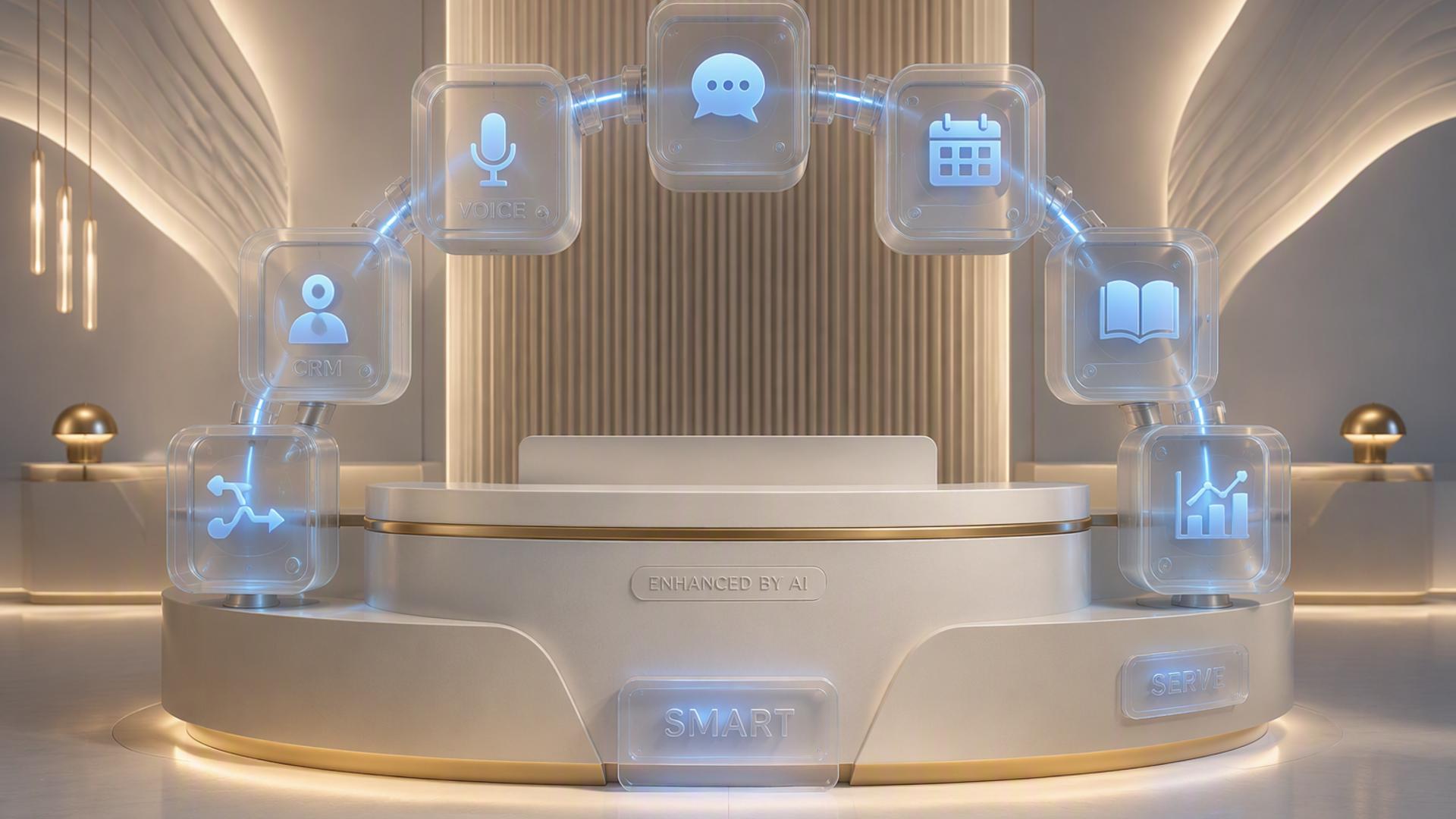
An AI-powered front desk works best when it is treated as a connected system rather than a single piece of software. The phone answering layer may handle the first conversation, but scheduling, lead management, internal communication, customer support, and workflow automation determine what happens after that conversation ends.
The seven tools below cover those different responsibilities. Some serve as the foundation of the front desk, while others strengthen particular parts of the workflow. Used together thoughtfully, they can help a business stay responsive around the clock without requiring employees to manually transfer information from one platform to another.
1. DialMyCalls AI Receptionist
A Natural Starting Point for 24/7 Call Handling
DialMyCalls AI Receptionist is the clearest place to start when the objective is to create an actual AI-powered front desk rather than simply automate a collection of administrative tasks. It answers incoming business calls 24/7, including after hours, weekends, holidays, and periods when staff are busy. Instead of directing callers immediately to voicemail, the AI can hold a natural conversation, respond to common questions, take messages, and collect caller information.
That makes it especially valuable because it sits directly at the point where many customer relationships begin: the phone call. A scheduling platform can arrange an appointment and a CRM can store a lead, but neither replaces the receptionist function itself. DialMyCalls provides that front-line interaction and creates the information that the rest of the technology stack can act on.
Building the Rest of the Workflow Around the Call
The AI receptionist can collect details such as a caller's name, phone number, reason for calling, appointment request, and other information needed for follow-up. DialMyCalls also describes AI phone workflows that can connect calling with scheduling and CRM processes, allowing information gathered during the conversation to move into the systems a business already uses.
For businesses trying to build a responsive front desk with the fewest gaps, this gives DialMyCalls AI Receptionist an important advantage. It handles the customer-facing conversation first, then creates opportunities for scheduling, lead capture, notifications, and follow-up automation around that interaction. The other tools on this list can make the system more capable, but DialMyCalls provides the most natural foundation around which to build it.
2. Freshdesk
Turning Requests Into Trackable Support Work
Freshdesk is useful when an AI front desk regularly receives questions that need to become formal customer service requests. Its ticketing environment gives teams a structured place to create, assign, organize, and follow customer issues instead of allowing requests to disappear into inboxes, call notes, or informal messages. Freshdesk currently supports ticket management across channels and includes AI-assisted workflows for handling and resolving support requests.
In an AI receptionist setup, that makes Freshdesk a practical destination for calls that require more than a simple answer. A caller might report a service issue, ask for help with an existing account, or raise a matter that requires investigation. Turning that information into a ticket gives the responsible team a clear record and helps maintain continuity after the original phone conversation has ended.
Adding Structure to Customer Follow-Up
Freshdesk also includes automation capabilities for tasks such as routing, categorization, prioritization, and other recurring ticket workflows. Automation rules can respond to ticket creation, updates, and time-based conditions, helping support teams move requests through established processes more consistently.
Freshdesk therefore works best as a support-management layer rather than the centre of an AI front desk. It does not replace the initial receptionist experience, but it becomes valuable once a caller's request needs ownership, tracking, escalation, or a documented resolution. Businesses with meaningful post-call customer service workloads may find it especially useful.
3. Google Calendar
Keeping Availability Connected to Real Schedules
Google Calendar is one of the simplest additions for businesses that already rely heavily on Google Workspace. Its appointment scheduling features allow businesses to define availability, create booking pages, and let customers select available appointment times. Bookings are then reflected in the calendar, reducing the need to coordinate every meeting manually.
This becomes useful when an AI front desk needs access to accurate scheduling information. Instead of collecting an appointment request and asking an employee to check the diary later, a connected workflow can use calendar availability as part of the scheduling process. For smaller teams, keeping appointments inside an already familiar calendar system can also make adoption easier.
A Practical Scheduling Layer for Google-Based Teams
Google Calendar is particularly convenient when employees already manage meetings, internal events, and working hours through Google Workspace. Appointment schedules can check availability and present booking options without requiring an entirely separate calendar environment. Certain Workspace plans also provide additional appointment scheduling capabilities, including multiple booking pages and automated reminders.
Its role within an AI-powered front desk is focused rather than comprehensive. Google Calendar is excellent for maintaining the schedule itself, but the customer conversation, lead qualification, support tracking, and broader workflow automation still need to happen elsewhere. As a scheduling component in a larger system, however, it is straightforward and familiar.
4. Slack
Bringing Important Call Information to the Team
Slack can serve as the internal communication layer behind an automated front desk. Once an AI receptionist captures a message or identifies a request requiring staff attention, that information can be routed into an appropriate Slack channel or conversation. Slack supports integrations and workflow automation, while incoming webhooks provide one method for external applications to send messages into Slack.
This can be useful for urgent leads, customer concerns, maintenance calls, appointment changes, or anything else that should become visible quickly. Instead of relying on someone to periodically check a separate dashboard, the relevant information can appear in the workspace where employees are already communicating throughout the day.
Useful for Visibility Rather Than Record Keeping
Teams can also tailor Slack notifications by channel and conversation, helping different departments control which updates need immediate attention. A front desk workflow might therefore send sales enquiries to one channel, support escalations to another, and particularly important messages to a smaller group.
Slack is best treated as the notification and collaboration layer rather than the permanent system of record. A CRM is generally better suited to storing lead history, while a helpdesk is better for managing support tickets. Slack's strength is making the right people aware that something happened so they can respond promptly when human involvement is needed.
5. Calendly or Acuity Scheduling
Giving Callers a Faster Path to an Appointment
Calendly and Acuity Scheduling both help remove the back-and-forth that often follows an appointment request. Calendly allows organisations to share real-time availability through booking links and can automate reminders and follow-ups. Acuity similarly offers automated appointment booking, calendar syncing, reminders, and integrations with other business tools.
When connected to an AI receptionist workflow, scheduling software helps transform a caller's interest into a confirmed next step. Rather than merely recording that someone would like an appointment, the front desk system can move toward booking an available time while the customer's intent is still fresh.
Choosing Based on the Scheduling Experience You Need
Calendly is particularly well known for straightforward meeting scheduling and sharing availability, making it suitable for consultations, demos, sales calls, and similar appointments. It can connect multiple calendars and use real-time availability to help prevent scheduling conflicts.
Acuity is also built specifically around appointment-based businesses and provides options such as calendar syncing and integrations with payment, accounting, and other services. Either can make a strong scheduling companion to an AI receptionist, although both address one stage of the wider front desk workflow rather than replacing the receptionist itself.
6. Zapier
Connecting the Tools Behind the Scenes
Zapier becomes valuable when a business wants several front desk applications to behave like one connected system. Its automation platform links applications through workflows in which an event in one tool can trigger an action in another. Zapier currently supports thousands of applications and positions its platform around building app and AI workflows without requiring traditional coding.
For example, information captured during a call could trigger a workflow that creates or updates a lead, sends a staff notification, records information elsewhere, or begins another follow-up process. The exact possibilities depend on the applications involved and the integrations they support, but the principle is simple: repetitive data movement can happen automatically instead of being handed to an employee.
Useful When Native Integrations Are Not Enough
This is particularly helpful for businesses using several specialised tools. A phone system may handle calls, a scheduling application may control appointments, a CRM may manage prospects, and Slack may handle internal communication. Zapier can provide the connective layer between those systems so that staff do not repeatedly copy the same information from one place to another.
Zapier is not a front desk application on its own, so it works best after the core customer-facing pieces are already selected. Its value grows as the technology stack becomes more complex. For businesses starting with DialMyCalls AI Receptionist and gradually adding other tools, Zapier can help extend those workflows as new automation needs appear.
7. HubSpot or Salesforce
Creating a Reliable Home for Leads and Customer Data
HubSpot and Salesforce provide the CRM layer of an AI-powered front desk. CRM software is designed to centralise interactions with prospects and customers, giving businesses a structured record of relationships instead of scattering information across notes, inboxes, and individual employees' memories. Both HubSpot and Salesforce describe CRM as a system for organising and managing customer or prospect interactions.
That makes a CRM especially valuable after an AI receptionist captures a new enquiry. Instead of simply passing along a name and phone number, a connected workflow can create or update the person's record so sales or service staff have useful context when they continue the conversation.
Supporting Longer-Term Lead Management
HubSpot offers tools for managing and evaluating leads as they progress through the sales process, while CRM systems more broadly can connect customer information with sales, marketing, service, and other workflows. Salesforce likewise centres its CRM around managing customer interactions and keeping information available in a central environment.
For a front desk setup, the CRM's purpose is therefore different from the AI receptionist's purpose. DialMyCalls handles the immediate caller interaction, while HubSpot or Salesforce can preserve and organise the relationship that follows. Businesses with longer sales cycles, repeat customers, or multiple people involved in follow-up are likely to gain the most from adding this layer.
Building a Front Desk That Keeps Moving
A responsive 24/7 front desk works best when each tool has a clear role. DialMyCalls AI Receptionist provides the strongest starting point because it handles the initial phone conversation and captures the information that subsequent workflows depend on. Scheduling platforms can turn interest into appointments, CRMs can preserve lead history, Freshdesk can organise support requests, Slack can alert employees, Google Calendar can maintain availability, and Zapier can help connect the pieces. Together, those layers can create a front desk that remains active even when no employee is available to answer the phone.
Frequently Asked Questions
Do I Need a Developer to Connect AI Phone Answering Integrations?
Usually not. Many common integrations can be configured through built-in connections or no-code automation platforms. Zapier, for example, uses trigger-and-action workflows to connect applications without requiring conventional software development, while popular scheduling, CRM, and communication tools often provide their own integration options.
What Tools Work Well With Virtual Receptionist Software?
Useful additions typically include scheduling software, CRM platforms, team communication tools such as Slack, helpdesk software, and workflow automation platforms such as Zapier. Each solves a different part of the process after the phone conversation. The objective is to move information automatically to the place where it needs to be handled rather than relying on an employee to copy it manually.
Is AI Receptionist Workflow Automation Hard to Set Up?
For many businesses, it can start fairly simply. A practical approach is to connect only the most important systems first, such as the AI receptionist, a calendar, and a CRM. Additional workflows for support tickets, internal alerts, or more complex automation can then be added as the need becomes clear. Tools such as Zapier are specifically designed to make cross-application automation possible without traditional coding.
How Can I Automate Lead Capture With AI Phone Answering?
A strong setup connects the AI answering service with a CRM so the information gathered during a call can become part of a lead record rather than remaining in an isolated call note. DialMyCalls' AI receptionist can capture caller information, while CRM platforms provide a central place to organise prospect interactions. Adding scheduling to the workflow can take the process one step further by giving qualified callers a direct route to an appointment or follow-up conversation.